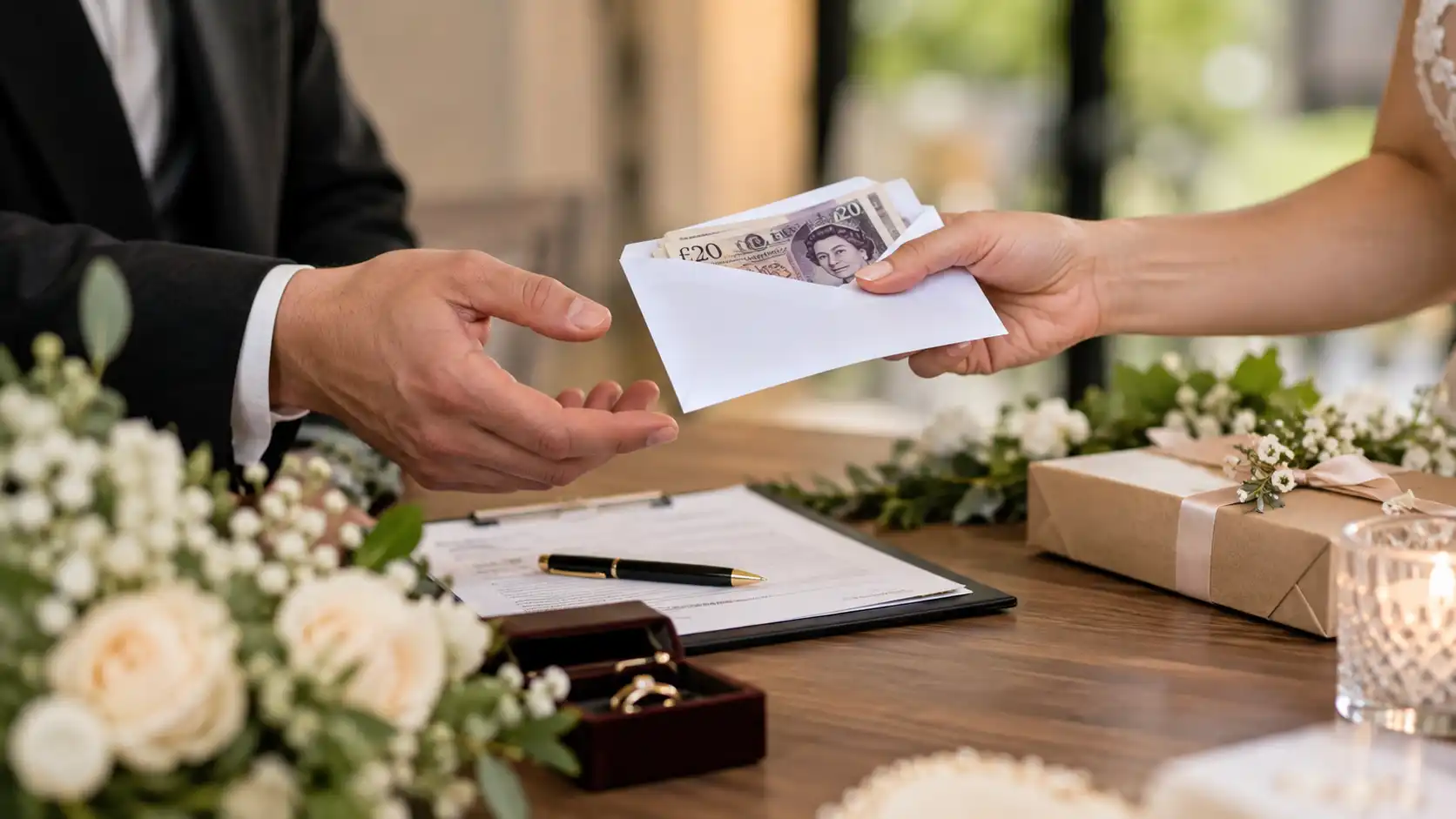
Paying Wedding Suppliers in Cash: Limits, Safety and Planning
Planning a wedding involves dozens of financial decisions, from paying the venue and photographer to arranging flowers, catering, entertainment and transport. While bank transfers and card payments have become standard, some wedding suppliers still accept cash, and couples may prefer it for smaller balances or payments made on the wedding day.
Cash can be convenient, but paying wedding suppliers this way requires more preparation than simply withdrawing money and handing it over. Couples need to consider withdrawal restrictions, security, receipts, contracts and their overall wedding budget.
A structured payment plan can help you avoid last-minute trips to the cash machine, carrying unnecessary amounts of money and disputes over whether a supplier has been paid.
Why Do Some Wedding Suppliers Accept Cash?
Many wedding businesses now prefer electronic payments because they create a clear transaction record. However, independent photographers, entertainers, decorators, drivers, beauty professionals and other smaller suppliers may still offer cash as a payment option.
Sometimes a supplier may request that the final balance is paid on the wedding day. Cash can make this convenient, particularly when several people are responsible for coordinating suppliers at the venue.
However, you should never assume that cash is required simply because a supplier asks for it. Confirm the payment method in advance and make sure it matches the terms agreed in your booking contract or invoice.
Whatever payment method you choose, the overall cost should remain within a realistic wedding budget. MoneyHelper recommends considering income, savings, existing debts and regular household expenses when deciding what you can afford to spend on a wedding.
Which Wedding Suppliers Might Be Paid in Cash?
Whether cash is suitable depends largely on the supplier and the size of the payment.
| Wedding Supplier | Cash Suitability | Key Consideration |
|---|---|---|
| Photographer | Possible | Request a receipt |
| Wedding venue | Usually electronic | Large balances may be better paid electronically |
| Florist | Possible | Confirm final amount beforehand |
| DJ or musician | Commonly possible | Arrange payment responsibility |
| Hair and makeup artist | Possible | Prepare the correct amount |
| Wedding transport | Possible | Confirm when payment is due |
| Caterer | Usually planned in advance | Keep payment records |
| Decorator | Possible | Check the written agreement |
For expensive services, electronic payments often make record-keeping easier because the transaction appears automatically in your banking history. Cash payments require you to create and retain your own evidence.
How Much Cash Should You Withdraw for Wedding Payments?
Start by listing every supplier who expects cash and the exact amount each one is owed. Avoid withdrawing a large round figure simply because you think additional money might be useful.
For example, suppose you need 350 for entertainment, 180 for transport and 120 for beauty services. Your planned cash requirement would be 650. You could then decide whether a small separate contingency amount is necessary rather than withdrawing substantially more than you expect to spend.
Check Withdrawal Restrictions Before the Wedding
The amount you can withdraw at once may depend on your bank, account type and whether you use an ATM or visit a branch. Couples expecting to make several cash payments should therefore check their bank’s rules well before the wedding.
Understanding your bank’s cash withdrawal limit can help you decide whether the money should be withdrawn over several days or whether you need to contact your bank about other withdrawal options.
Do not wait until the wedding morning to discover that you cannot withdraw the full amount you planned to pay.
Is It Safe to Pay Wedding Suppliers in Cash?
Cash creates a different type of risk from electronic payments because physical money can be lost or stolen. Carrying several envelopes containing supplier payments can also become difficult when you are concentrating on the ceremony, guests and other wedding-day responsibilities.
The safest approach is to withdraw only what is genuinely needed and keep it securely stored until payment time.
It can also help to assign payment responsibility to one trusted person. Instead of the couple carrying cash throughout the venue, a responsible family member, wedding coordinator or other trusted person can manage clearly labelled supplier payments.
Avoid leaving cash in visible bags, unattended rooms, unlocked vehicles or public areas.
Always Get Proof of Cash Payments
One of the biggest disadvantages of cash is the lack of an automatic transaction record.
A bank transfer normally leaves an electronic record showing the date, amount and recipient details. A cash payment does not provide equivalent evidence unless you obtain documentation.
Ask the supplier for a receipt or written confirmation whenever you make a significant cash payment. Ideally, it should identify the supplier, amount received, payment date and what the payment relates to.
Keep the receipt together with the contract and invoice.
Consumer rights can apply to goods and services, but evidence of what was purchased and paid for can be important when resolving a disagreement. MoneyHelper recommends retaining records when dealing with payment problems.
Should You Pay the Entire Wedding Bill in Cash?
Paying every supplier in cash is rarely necessary.
A mixed approach can provide greater convenience and better record-keeping. Deposits and large balances might be paid electronically, while smaller wedding-day expenses can be handled in cash when appropriate.
Card payments can also offer protections that cash does not provide. For qualifying purchases costing more than 100 and up to 30,000, Section 75 of the Consumer Credit Production Act may provide protection when a credit card is used. In some circumstances, paying only the deposit by credit card can still provide Section 75 protection for the full qualifying purchase.
Debit-card transactions may potentially be covered through chargeback instead, although chargeback is not the same statutory protection as Section 75.
That does not mean cash should never be used. It simply means couples should understand what protections and records they may give up when choosing it.
How Should You Organise Cash for the Wedding Day?
If several suppliers need cash, organisation becomes essential.
Prepare individual envelopes before the wedding rather than counting money at the venue. Each envelope can identify the supplier and contain the agreed amount. Keep your own private checklist showing which payments are outstanding.
For example:
| Supplier | Amount Due | Payment Timing | Confirmation |
|---|---|---|---|
| DJ | 350 | End of reception | Receipt required |
| Driver | 180 | After final journey | Receipt required |
| Makeup artist | 120 | After service | Receipt required |
| Decorator | 250 | On completion | Receipt required |
Keep the envelopes somewhere secure and give them only to the person responsible for payments.
Most importantly, separate supplier money from personal spending cash. Mixing the two makes it harder to know whether every supplier can still be paid.
What Should You Check Before Paying a Supplier?
Before handing over cash, confirm that the service has been provided according to the agreed terms and check the amount against the contract or invoice.
For deposits paid months before the wedding, request written acknowledgement immediately. For final balances, ask the supplier to confirm that the account is fully settled.
If somebody other than you will make the payment, give them clear instructions. They should know exactly who is being paid, how much is due and whether a receipt needs to be collected.
This simple process can prevent confusion later.
How Can You Build Cash Payments Into Your Wedding Budget?
Cash should be treated as part of the wedding budget rather than as separate spending.
Create one central record containing the total supplier cost, deposits already paid, outstanding balances, payment methods and due dates. MoneyHelper recommends setting a realistic wedding budget and tracking spending so costs do not spiral beyond what you can afford.
Keep a Separate Contingency Fund
Unexpected expenses can appear close to the wedding. You might need additional transport, last-minute decorations or another small service.
A contingency fund can help, but it does not all need to be held as physical cash. Keeping part of the emergency budget accessible through your bank account reduces the amount of money you have to carry.
What Are the Risks of Large Cash Payments?
The most obvious risks are theft and loss, but documentation is equally important.
If you hand a supplier a large amount of cash without receiving confirmation, proving the payment later could become difficult. Cash can also make budgeting harder because there may be no transaction automatically recorded on your bank statement.
By comparison, bank statements provide a history of account transactions and can help people monitor their spending.
Another concern is withdrawing too much money too early. Keeping a substantial amount of cash at home for weeks before the wedding creates unnecessary security risks.
Plan withdrawals close enough to the payment date to minimise storage time while still leaving enough time to deal with any banking restrictions.
Final Thoughts
Paying wedding suppliers in cash can work perfectly well when it is planned carefully. The key is knowing exactly how much you need, checking withdrawal restrictions beforehand and maintaining clear records for every payment.
Large or important supplier payments may be easier to manage electronically because they create an automatic transaction history and, depending on the payment method and circumstances, may offer additional payment protections. Cash can then be reserved for suppliers who specifically accept it or for smaller wedding-day expenses.
Prepare supplier payments in advance, store the money securely, nominate a trusted person to handle payments where appropriate and always request confirmation that significant cash balances have been received.
With a clear budget and organised payment schedule, cash can remain a useful option without creating unnecessary financial stress during an already busy wedding day.