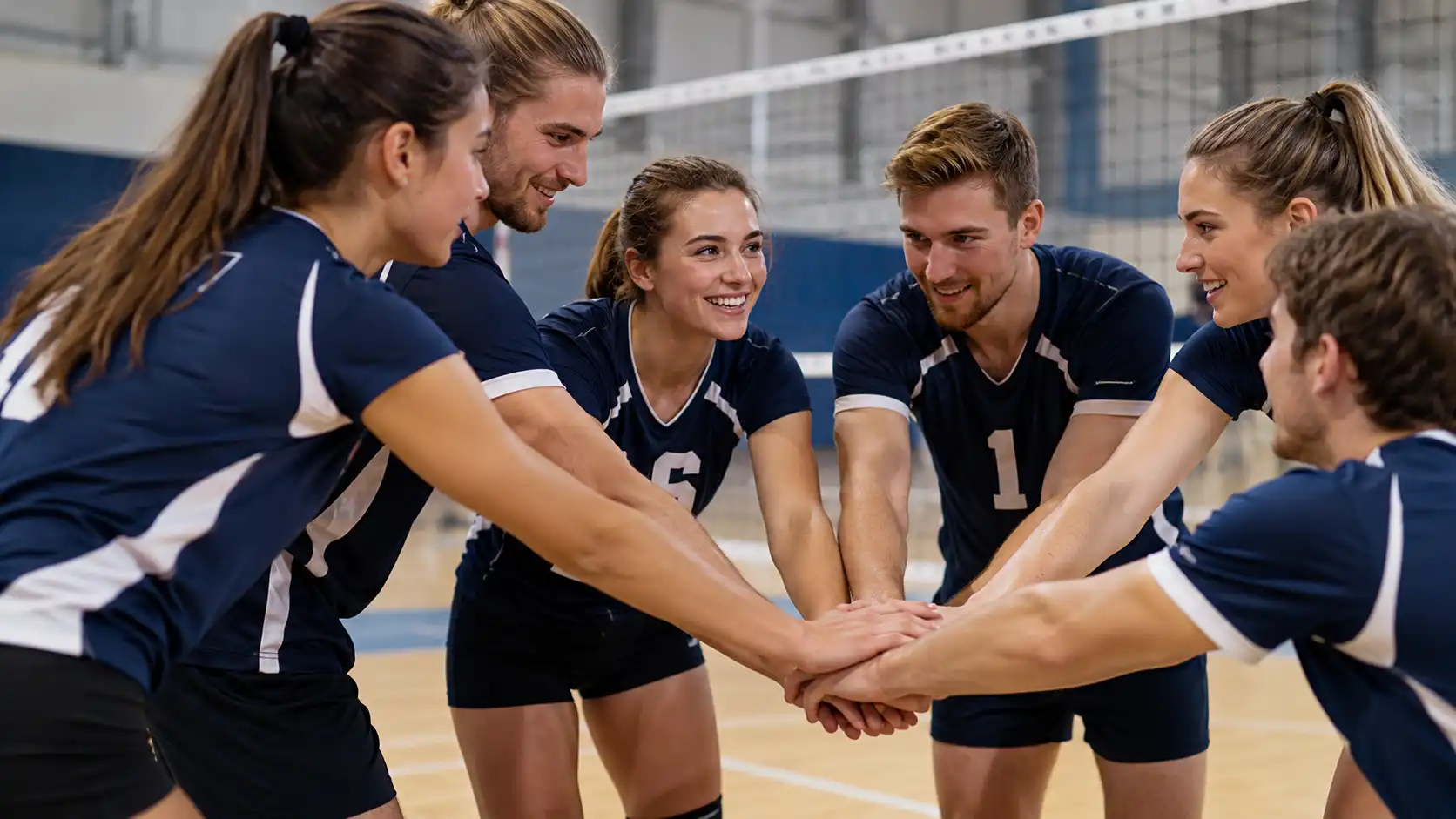
How to Build a Stronger Team in Volleyball Games?
Volleyball may look like a game built around serving, setting, blocking and attacking, but successful teams depend on much more than individual skills. Every rally requires players to read one another, communicate quickly and understand what their teammates are likely to do next.
A team filled with talented players can still struggle when everyone plays as an individual. By contrast, a balanced group that communicates well and understands its roles can often perform more consistently. The FIVBs coaching guidance similarly identifies teamwork, complementary player abilities, tactics, experience and coaching strength among the building blocks of a strong volleyball team.
Whether you are playing competitive volleyball, a casual volleyball game or a volleyball-based game online, the principles of building an effective team remain surprisingly similar.
Understand Every Player’s Strengths
The first step towards building a stronger volleyball team is understanding what each player contributes.
Some players naturally excel at attacking, while others are better at receiving difficult serves or keeping rallies alive through defence. A good setter may not score the most points, but their decision-making can determine how effectively the entire attack functions.
Instead of choosing players purely according to individual statistics, consider how their abilities complement each other.
| Team Area | What to Look For |
|---|---|
| Serving | Accuracy, consistency and pressure |
| Setting | Decision-making and ball control |
| Attacking | Timing, power and placement |
| Blocking | Positioning, anticipation and reach |
| Defence | Reactions, movement and reading attacks |
| Leadership | Communication and calm decision-making |
A balanced team should have enough strength across these areas to cope with different situations rather than depending on one outstanding player.
Give Every Player a Clear Role
Players perform better when they know what is expected of them.
In organised indoor volleyball, specialist roles such as setter, libero, middle blocker and outside hitter help create structure. Even in less formal games, assigning responsibilities can prevent confusion.
The FIVB coaching manual stresses that each player should have a specific role within the team’s strategy and that those responsibilities should match the player’s technical abilities.
Avoid Building Around One Star Player
It can be tempting to organise everything around the strongest attacker or most experienced player. That strategy may work temporarily, but opponents can adapt quickly.
A stronger approach is to create several ways to win points. If one attacker is being blocked effectively, another should be ready to take greater responsibility. If serving pressure is not working, the team should be capable of changing its approach.
Depth makes a volleyball team harder to predict.
Make Communication Part of Every Rally
Communication is one of the simplest ways to improve team performance.
Players should call the ball, warn teammates about short serves, identify free balls and communicate defensive responsibilities. These short messages reduce hesitation and help players react as a unit.
Communication should also continue away from active rallies. Players need to be comfortable discussing mistakes, positioning and tactical adjustments without turning those conversations into personal criticism.
USA Volleyball describes communication and teamwork as central parts of the sport, while its coaching resources emphasise open communication and constructive feedback between players and coaches.
Build Team Chemistry Through Regular Practice
Team chemistry rarely appears automatically. It develops through repeated experience.
When players practise together regularly, they begin recognising one another’s habits. A setter learns where an attacker prefers the ball. Defenders become more confident about who will cover particular areas. Blockers learn how teammates move alongside them.
Practice should therefore include realistic game situations rather than only isolated technical exercises.
USA Volleyball’s coaching resources encourage coaches to consider whether drills reproduce the environment in which players actually need to read, anticipate and compete.
Use Team-Building Resources Carefully
Players looking for additional gaming resources may also come across guides, rewards and codes that support progression in volleyball-themed games. When researching ways to build your volleyball team codes, always check what a resource actually covers before relying on it, particularly when links, codes or game information can change.
The same principle applies to real volleyball: resources can help, but they cannot replace practice, communication and good decision-making.
Learn to Play Through Mistakes
Mistakes are unavoidable in volleyball. Even experienced players miss serves, mistime blocks and make poor passes.
The important question is what happens immediately afterwards.
Teams become vulnerable when one mistake turns into frustration and then another mistake. Players need routines that help them reset quickly and concentrate on the next rally.
The FIVB coaching manual recommends focusing on the immediate play: once one contact has happened, attention should move towards the next action rather than remaining fixed on the previous error.
This mindset can improve both individual confidence and team stability.
Develop More Than One Playing Strategy
A team should not enter every match with only one plan.
Different opponents create different problems. One team may struggle against powerful serves, while another may have excellent reception but weaker blocking. Successful teams recognise these differences and adapt.
Study Opponents During the Game
Watch how the opposing team receives serves, where its strongest attackers operate and which players appear uncomfortable under pressure.
Small observations can influence major tactical decisions.
For example, a team might change its serving target, alter blocking positions or use more varied attacks rather than repeatedly hitting into the same defensive structure.
FIVB coaching guidance highlights the importance of considering match-ups within rotations and using team strengths against opponent weaknesses.
Improve Individual Skills Without Losing Team Focus
Teamwork does not mean individual development becomes less important.
A stronger team is created when every member continues improving basic skills. Passing, serving, setting, attacking, blocking and movement all contribute to collective performance.
However, players should understand how their development benefits the team.
An attacker improving shot placement gives the setter more attacking options. A server becoming more consistent reduces unnecessary errors. A defender improving court awareness allows teammates to position themselves more confidently.
The objective is not simply to become a better individual player. It is to become a player who makes the whole team more effective.
Create Trust Between Players
Trust changes how confidently a team performs.
Players need to believe teammates will cover open spaces, attempt difficult saves and continue supporting one another after mistakes. Without that confidence, hesitation begins to appear.
Trust can be strengthened through consistent behaviour. Arriving prepared, communicating clearly, accepting responsibility and respecting teammates all contribute to a healthier team environment.
USA Volleyball notes that team-building activities and respectful communication can help strengthen connections among teammates.
Teams should also create an environment where feedback is normal. Constructive feedback focuses on improving the next action rather than blaming someone for the previous one.
Keep Training Competitive and Enjoyable
Constant repetition without competition can make training predictable.
Adding small competitive challenges gives players a reason to communicate and make decisions under pressure. Short-sided games, serving competitions and rally challenges can make sessions more engaging while still developing useful skills.
USA Volleyball provides coaches with drills and competition ideas designed to create more game-like learning environments.
Enjoyment matters too. Players who remain engaged are generally more willing to practise, communicate and support their teammates.
Measure Progress as a Team
Winning is important, but it should not be the only measurement of improvement.
A team can track serving errors, reception quality, communication, defensive coverage and how effectively it responds after losing points. These indicators can reveal improvement even before results change.
After games, discuss what worked and identify one or two areas that need attention. Keeping reviews focused prevents players from becoming overwhelmed.
The goal should be steady progress.
Strong Volleyball Teams Are Built on Cooperation
Building a stronger team in volleyball games requires more than collecting talented players. Successful teams combine complementary skills, clearly defined responsibilities, communication, tactical awareness and trust.
Players must understand that every contact affects what happens next. A good pass creates a better setting opportunity. A controlled set gives an attacker more choices. Strong defensive positioning gives teammates confidence to commit to their own responsibilities.
That connected approach is what turns individual players into a genuine team.
For further learning, the FIVB coaching resources provide official coaching manuals and educational materials, while USA Volleyball coaching resources offer drills, lesson plans and development guidance.
When players understand their roles, communicate consistently and continue improving together, the entire team becomes more organised, adaptable and difficult to beat.