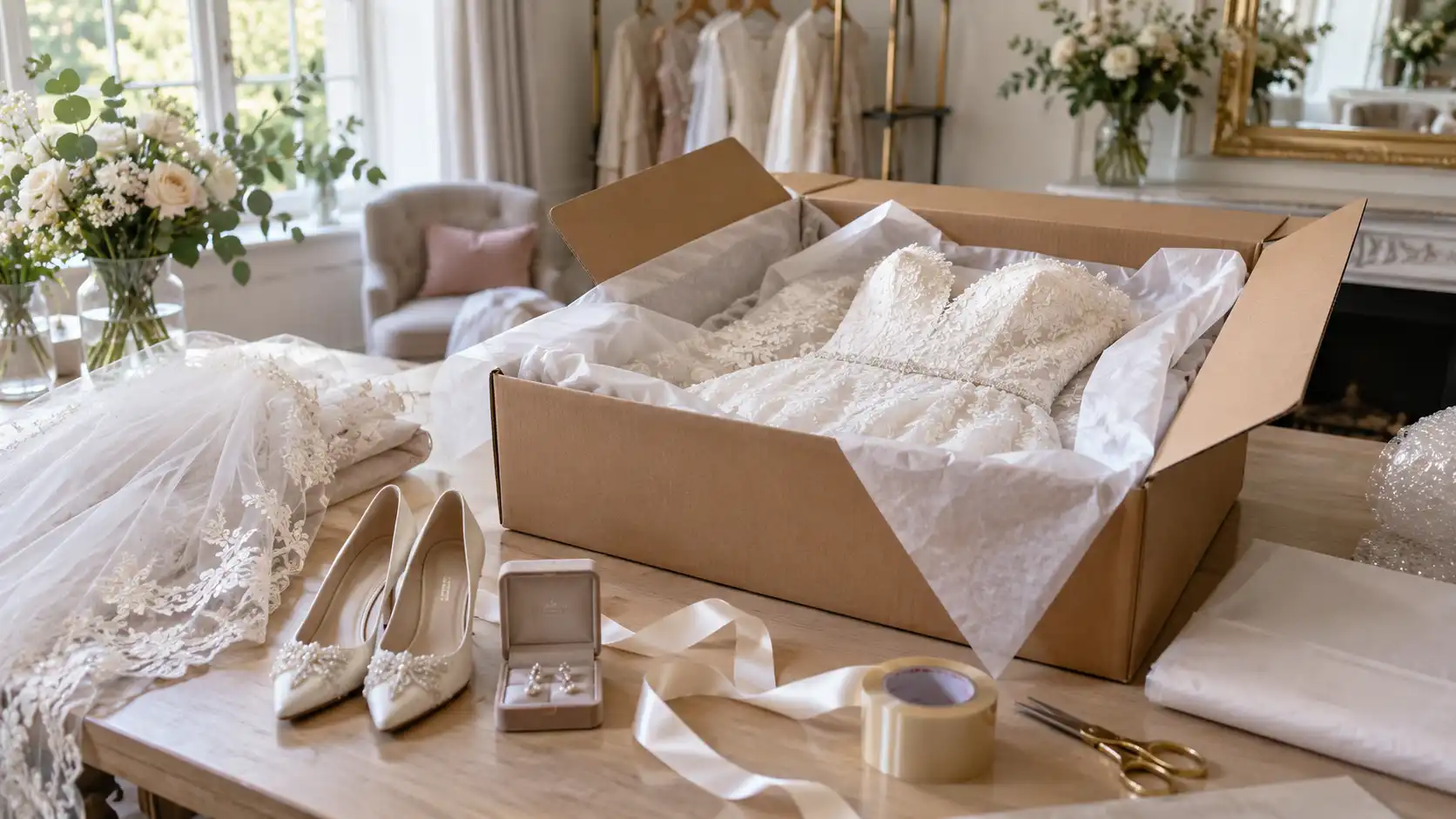
Posting Wedding Dresses and Accessories: Costs, Packaging and Delivery Tips
Wedding dresses, veils, shoes, jewellery and other bridal accessories are often among the most valuable and sentimental items involved in a wedding. Whether you are sending a dress to a bride, returning an outfit to a boutique, posting accessories to a wedding venue or selling a pre-owned gown online, careful packaging and the right delivery service are essential.
Posting wedding clothing is different from sending an ordinary parcel. Dresses can be bulky despite being relatively light, delicate fabrics can crease or snag, and accessories may be fragile or valuable. Delivery costs can also increase quickly when the parcel is large or requires additional insurance.
Understanding how parcel size, weight, packaging and delivery speed affect the final price can help you send wedding items securely without spending more than necessary.
How Much Does It Cost to Post a Wedding Dress in the UK?
The cost of sending a wedding dress depends mainly on its packed dimensions, weight, destination and chosen courier service.
A lightweight dress may weigh only a few kilograms, but once it is carefully folded, wrapped and placed inside a protective box, it can become a relatively large parcel. Couriers often apply limits based on dimensions as well as weight, so measuring the finished package is important.
As of September 2026, Royal Mail’s online Tracked 48 service starts from 3.65 for a small parcel up to 2kg and 5.55 for a medium parcel up to 2kg. A medium parcel weighing up to 10kg starts from 7.35 online. Royal Mail states that Tracked 48 normally aims to deliver within two to three working days.
Evri’s published online rates also vary by parcel size, weight and whether the sender chooses standard, next-day or collection services. For example, its standard drop-off rate is 4.79 for a standard parcel between 1kg and 2kg and 6.59 for a parcel between 2kg and 5kg at the time of writing.
These prices should be treated as a guide because courier charges can change. Royal Mail has also announced further personal-customer parcel price changes from 5 October 2026, making it particularly important to check the latest rate immediately before buying postage.
| Wedding item | Typical packaging | Main delivery consideration |
|---|---|---|
| Wedding dress | Strong garment or postal box | Size, tracking and compensation |
| Veil | Small protective box | Avoiding crushing and snagging |
| Wedding shoes | Original shoe box inside outer box | Protecting shape and decoration |
| Jewellery | Small rigid box and padded outer packaging | Tracking and insurance |
| Hair accessories | Padded rigid box | Preventing bending or breakage |
| Bridesmaid dress | Garment bag inside parcel box | Creasing and moisture protection |
| Wedding decorations | Strong box with internal padding | Weight and fragile components |
How Should You Package a Wedding Dress for Posting?
Good packaging protects the dress from moisture, dirt, crushing and movement while it is travelling through the courier network.
Clean and Prepare the Dress First
Before packing the dress, make sure it is clean and completely dry. If it has recently been professionally cleaned, keep it in suitable protective wrapping until you are ready to pack it.
Remove detachable belts, brooches or other accessories where possible and wrap them separately. Loose decorations can rub against delicate material during transport.
You should also photograph the condition of the dress before packing it. Images can be useful if you are returning a dress to a retailer, selling it to another person or making a claim following loss or damage.
Fold the Dress Carefully
Avoid simply pushing a wedding dress into the smallest possible box. Excessive compression can create deep creases and may damage structured sections such as boning, beading or lace.
Place clean acid-free tissue paper between folds where appropriate. Start with the train and skirt before gently folding the sides towards the centre. Sleeves should be positioned carefully rather than tightly folded.
For highly structured, heavily embellished or expensive gowns, professional bridal packing may be preferable.
Use a Strong Outer Box
A wedding dress should normally be sent in a sturdy corrugated cardboard box rather than a thin mailing bag.
The box should be large enough to avoid excessive pressure but not so oversized that the dress moves around freely. Fill unnecessary spaces with suitable packing material to minimise movement.
A waterproof inner layer can provide additional protection in case the outside of the parcel becomes wet during transportation.
How Can You Keep Delivery Costs Under Control?
Packaging securely does not necessarily mean using the biggest available parcel box. Because courier prices can depend on both weight and dimensions, choosing packaging that fits the item efficiently can reduce the delivery charge.
Measure the length, width and height after the dress has been completely packed. Then weigh the entire parcel, including the box, protective materials and accessories.
Comparing courier services is particularly useful when posting bridal items because prices can vary considerably between parcel categories. Checking current postal costs uk can help you understand how parcel weight and service choice may influence what you ultimately pay.
Do not reduce the parcel size at the expense of protecting the dress, however. Saving a few pounds on postage is unlikely to be worthwhile if delicate lace, embroidery or structured fabric is damaged.
Should You Use Tracked Delivery for Wedding Dresses?
Tracking is strongly recommended when sending an important wedding item.
Wedding clothing is often needed by a specific date, meaning uncertainty about the location of a parcel can become particularly stressful. A tracked service allows both sender and recipient to follow its progress and usually provides confirmation when the package reaches its destination.
Royal Mail’s Tracked 24 and Tracked 48 services, for example, provide tracking to the delivery point and photo confirmation. Royal Mail currently lists compensation of up to 75 for these services, subject to its conditions.
However, compensation limits need careful attention when posting an expensive dress.
A designer gown may be worth hundreds or thousands of pounds, so standard parcel compensation may not cover its full value. Before sending it, check exactly what the courier covers, whether wedding clothing is eligible and whether additional insurance is available.
Keep the purchase receipt, sale documentation and photographs of the dress and packaging.
How Should Wedding Accessories Be Posted?
Wedding accessories can require even more careful packaging than clothing because many are small, delicate or easily crushed.
Veils and Headpieces
Veils should be loosely folded with tissue paper between the layers. Decorative combs should be protected so they cannot catch on the fabric.
Tiaras, crowns and structured headpieces are better placed inside a rigid box with padding around them. Avoid putting pressure directly onto crystals, pearls or decorative elements.
Wedding Shoes
Place wedding shoes in their original box where possible, stuffing them gently with clean tissue paper to help maintain their shape.
The shoe box should then be placed inside a stronger postal box. Do not rely on the retail shoe box as the only external packaging because it may not withstand the normal handling involved in parcel delivery.
Jewellery
Jewellery deserves particular attention because courier compensation rules can differ for valuable items.
Royal Mail specifically notes that valuables such as jewellery are not covered by the standard compensation offered with Tracked 48 and recommends using an appropriate Special Delivery service when sending eligible valuables.
Before posting valuable wedding jewellery, therefore, check the carrier’s prohibited-items and compensation rules rather than assuming that standard parcel insurance applies.
When Should You Post Wedding Items?
Avoid leaving important deliveries until the final few days before the wedding.
Even services with fast delivery aims can encounter delays because of weather, transport disruption, incorrect addresses or unusually busy periods.
For a wedding dress needed on a particular date, build additional time into the schedule. The recipient may also need time for a final fitting, steaming or alterations after the gown arrives.
If you are posting directly to a hotel or wedding venue, contact the venue first. Confirm that it accepts parcels for guests, find out exactly how the address should be written and ask whose name should appear on the package.
What Should You Check Before Sealing the Parcel?
Before sealing the box, make sure every item that needs to be included is actually inside it. Wedding outfits often have detachable components such as straps, belts, underskirts or garment covers that are easy to overlook.
Check the destination address carefully and include the correct postcode. If the carrier provides electronic notifications, enter the recipient’s email address or mobile number accurately.
Secure the box with strong parcel tape along all main openings. Do not leave handles, string or loose wrapping on the exterior because these can become caught during automated parcel handling.
Finally, keep your postage receipt and tracking information until the recipient confirms that everything has arrived safely.
Is It Better to Post or Personally Transport a Wedding Dress?
The best option depends on distance, value and convenience.
Taking the dress personally provides greater control, particularly for an extremely valuable or heavily embellished gown. However, personal transportation is not always practical, especially when the bride, boutique, wedding venue and alterations specialist are located in different parts of the country.
A reputable tracked courier service can therefore be a practical option when the dress has been packaged correctly and appropriate compensation or insurance is in place.
For less valuable items such as standard bridesmaid dresses, shoes or simple accessories, ordinary tracked parcel services may be sufficient.
Final Thoughts
Posting wedding dresses and accessories successfully requires more preparation than sending an everyday parcel. The cheapest delivery option should not automatically be the deciding factor.
Start by protecting the garment properly, use a strong box and measure and weigh the finished parcel accurately. Compare services according to price, delivery speed, tracking and compensation rather than postage cost alone.
For expensive dresses and jewellery, check the carrier’s insurance and restricted-item rules particularly carefully. Allow extra time before the wedding and retain photographs, receipts and tracking details until delivery is confirmed.
With secure packaging and a suitable delivery service, wedding dresses, veils, shoes and accessories can be transported safely while keeping postage costs predictable and avoiding unnecessary last-minute problems.